ric2brain — My AI-Native Second Brain
Obsidian Vault | 9000+ notes | RAG | LLM Wiki | Agent Memory
I don't take notes. I build a living knowledge ecosystem — indexed and queryable by AI.
!The Problem
By 2022, my information was scattered across 7 platforms: Google Drive, phone notes, emails, local documents, bookmarks. Every search cost time. Every project change meant starting from zero.
→The Solution
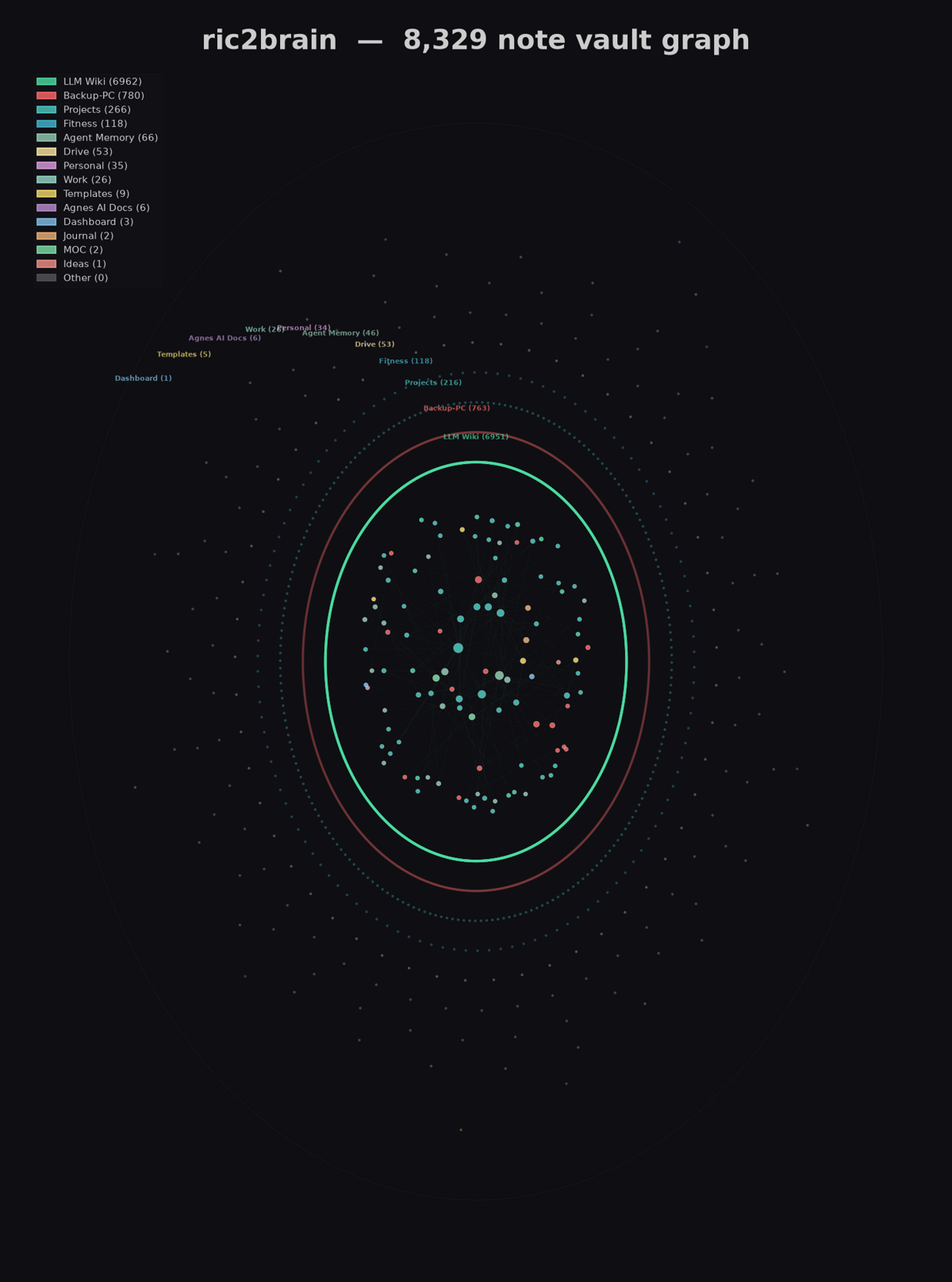
A unified 9000+ note Obsidian vault, organized by semantic areas with naming conventions and frontmatter. Every note has: title, date, tags, type, and wiki links to related notes. The result is a living knowledge graph.
The AI Engines
RAG (ChromaDB)
Semantic embeddings of the entire vault. Search by meaning, not keywords. The all-MiniLM-L6-v2 model turns every note into a vector; ChromaDB returns the most relevant chunks in milliseconds.
LLM Wiki
Generates a structured index of all notes, grouped by area. Every AI agent operating on the vault reads this index first to navigate content without scanning 9000 files.
Agent Memory
A dedicated directory for AI agent operational memory: setup, session logs, daily logs. Every agent records what it did, why, and which files it touched — creating shared memory across sessions.
MCP Integration
The vault is exposed as an MCP (Model Context Protocol) resource, accessible from any compatible AI agent. RAG and LLM Wiki tools are independent MCP servers.
Workflow
“Today the vault is my external memory. Every project, idea, lesson, and contact is indexed and retrievable in seconds. AI agents work on top of it like an assistant that knows my entire context.”
Build Your Own Second Brain
The ric2brain vault is private (it contains personal data), but the framework is open source. You can start with Obsidian today and add AI engines as you grow.